Pyrolysis Reactor with External Furnace
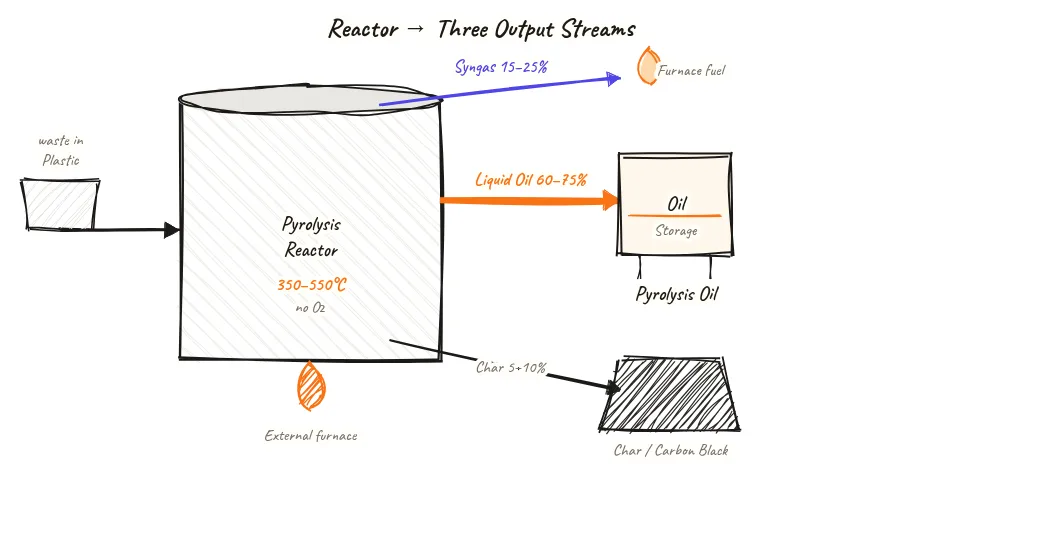
The central machine in a plastic pyrolysis plant — a sealed cylindrical reactor vessel heated indirectly through a refractory furnace shell, operating at 350–550°C without oxygen to thermally crack plastic into oil vapors, syngas, and char.
Beyond definitions
Planning to start a Plastic Pyrolysis business?
Get the full business understanding — capex, regulations, machinery, vendor questions, and risk checks before you commit capital.
How to read this sketch
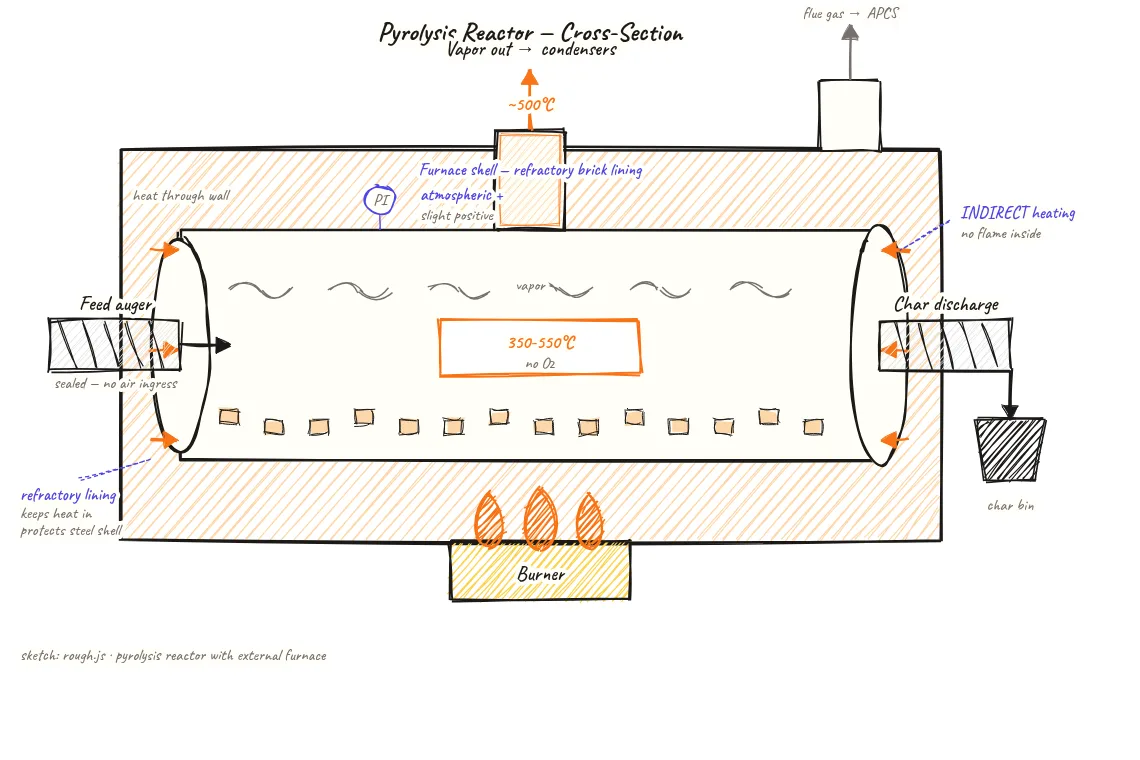
This is a vertical cross-section through the reactor and furnace assembly. Read it as follows:
- Outer shell (Furnace): The large outer rectangle with hatched lining is the refractory-lined furnace. The burner fires into the annular space between furnace and reactor.
- Inner vessel (Reactor): The cylinder sitting inside the furnace is the sealed reactor. All pyrolysis chemistry happens inside this vessel.
- Vapor outlet (top): Arrow pointing up — where cracked vapors exit to the condenser train.
- Feed auger (left): Screw conveyor moving pre-processed plastic into the reactor.
- Char discharge (bottom): Sealed screw conveyor removing solid char after cooling.
- PI tag: Pressure instrument — the critical safety monitor. Normal: 0.05–0.3 bar gauge.
- Labels: 350–550°C is the reactor temperature range. 'no O₂' confirms the sealed, oxygen-free environment.
About this sketch
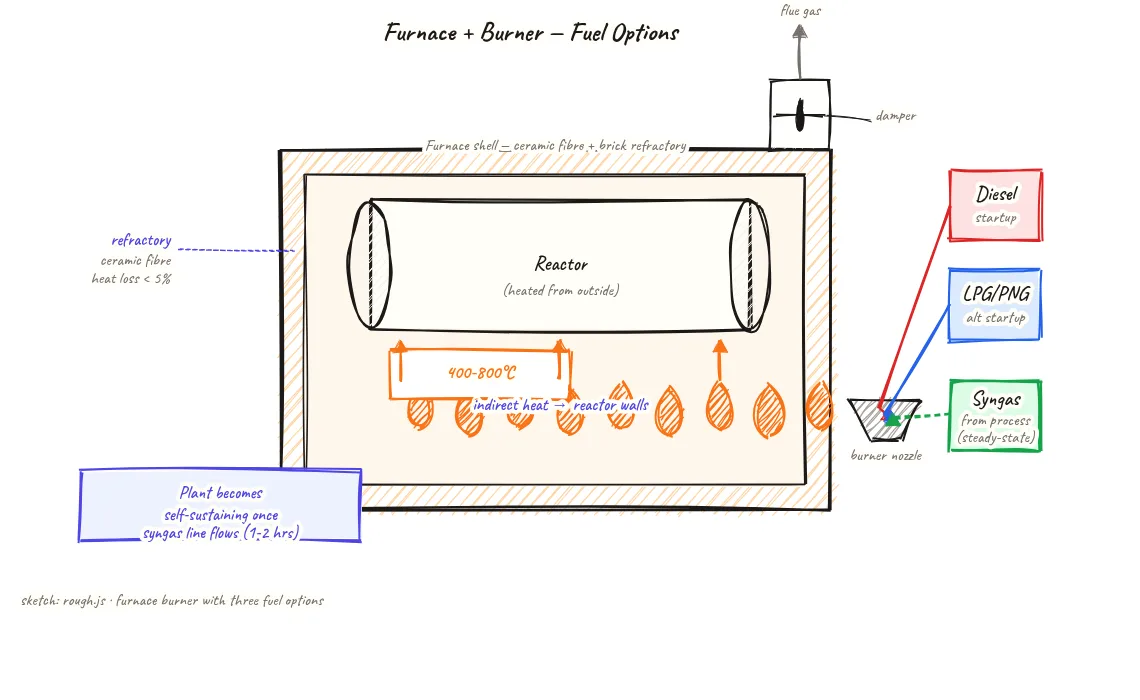
The pyrolysis reactor is the heart of the plant — the sealed vessel where plastic is thermally cracked at 350–550°C in the complete absence of oxygen. This diagram shows the most common Indian commercial design: an external furnace approach where the reactor cylinder sits inside a larger refractory-lined furnace shell, and the burner heats the annular gap between the two vessels. Heat transfers through the reactor wall by conduction, never by direct contact with flame.
Indirect heating is a deliberate safety choice. Keeping the open flame outside the reactor ensures that even if a small amount of air enters the reactor shell, it will not come into contact with both heat and plastic vapors simultaneously. The refractory lining of the furnace shell — typically 150–250 mm of high-temperature firebrick or castable refractory — holds the furnace temperature at 400–800°C while the reactor inside reaches its target of 350–550°C.
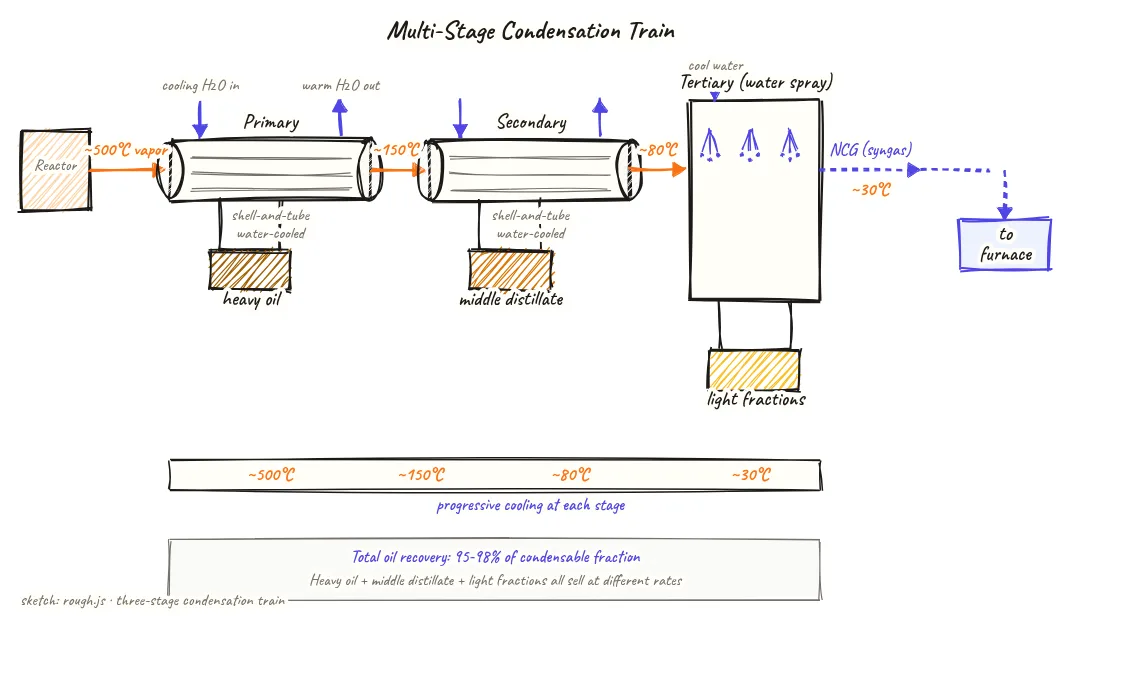
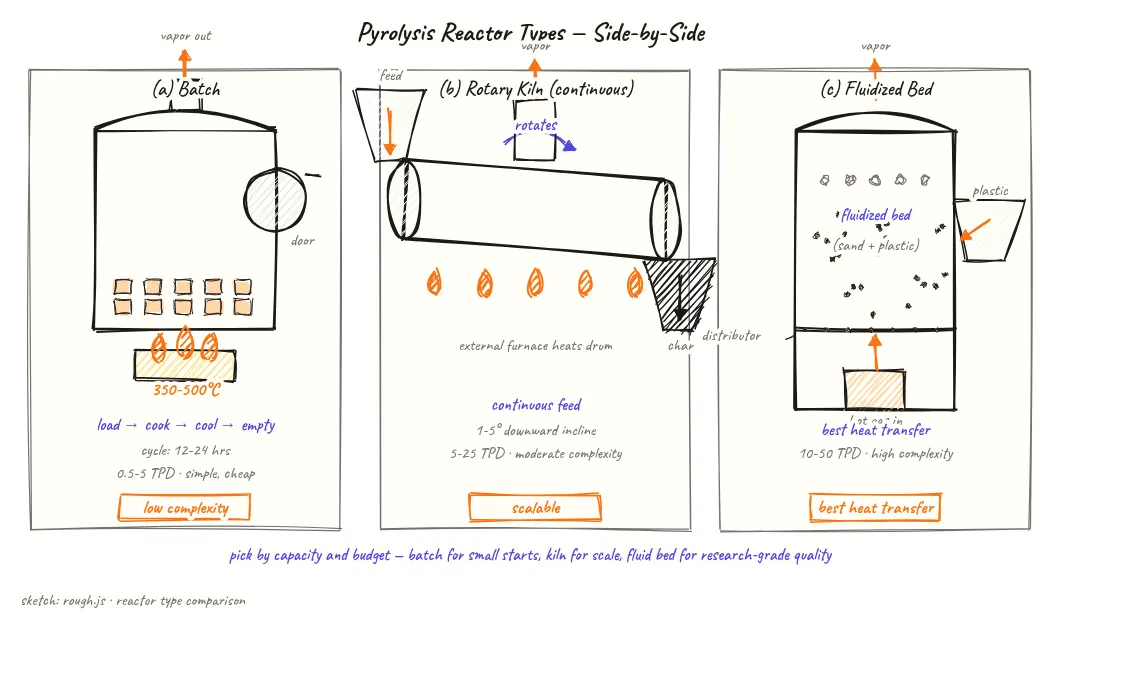
A feed auger on one side continuously moves pre-processed plastic into the reactor at a controlled rate for continuous units, or the reactor is loaded in batches for batch designs. Inside, long polymer chains thermally crack into shorter hydrocarbon chains as temperature rises. Vapors rise and exit through the vapor outlet at the top and travel to the condenser train. Solid char settles at the bottom and exits via the sealed char discharge — typically a screw conveyor with an airlock to prevent air ingress while hot char is removed.
A pressure instrument (PI) monitors internal pressure continuously. Normal operating pressure is slight positive (0.05–0.3 bar gauge) to prevent air from being drawn in. An automatic shutdown triggers if pressure falls below zero (air ingress risk) or rises above the PRV setpoint (overpressure risk). This instrument tag is the single most critical measurement in the plant.
Key insights
- External (indirect) heating keeps the open flame separated from plastic vapors inside the reactor — the primary safety design choice for Indian commercial pyrolysis plants.
- Reactor pressure is maintained at slight positive (0.05–0.3 bar gauge) to prevent air from being drawn in — air plus hot plastic vapors is an explosion risk.
- Temperature range of 350–550°C is where most plastics (PE, PP, PS) thermally crack; higher temperatures increase gas yield at the expense of oil yield.
- The sealed char discharge screw prevents air ingress during char removal — discharging while the reactor is still at temperature would cause char to reignite.
- Refractory lining (150–250 mm) is a significant part of the furnace construction cost — it must be replaced every 5–10 years depending on thermal cycling intensity.