Slow vs Fast vs Catalytic Pyrolysis
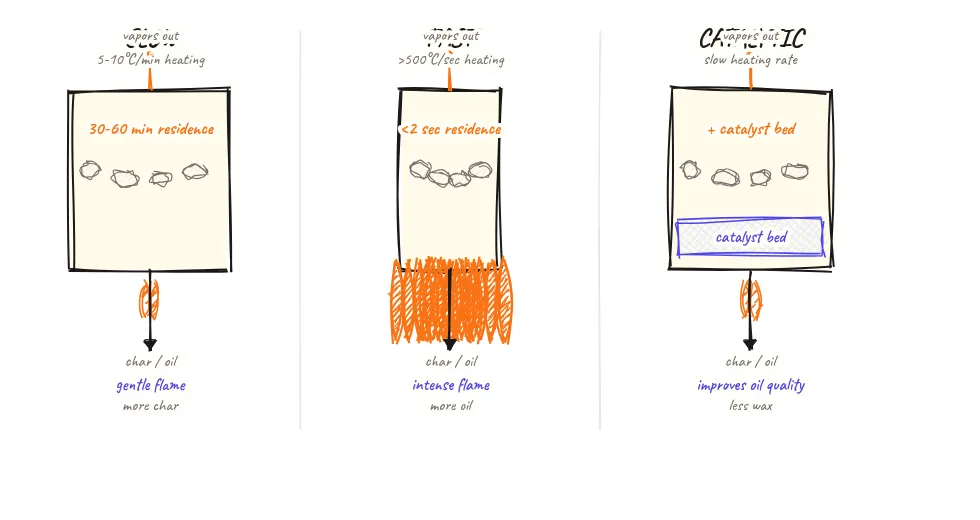
Three pyrolysis modes — slow (gentle heat, 30–60 minutes, high oil yield), fast (intense heat, seconds, high gas), and catalytic (slower rate plus catalyst bed, lower temperature, cleaner oil) — showing why slow pyrolysis is the standard commercial choice in India.
Beyond definitions
Planning to start a Plastic Pyrolysis business?
Get the full business understanding — capex, regulations, machinery, vendor questions, and risk checks before you commit capital.
How to read this sketch
Three panels arranged side by side. Each panel shows one reactor type with its key parameters. Read each panel from top to bottom:
- Reactor shape: Wide batch reactor for slow, narrow high-velocity reactor for fast, standard reactor with catalyst bed inside for catalytic.
- Flame intensity: Gentle flame at reactor base for slow, intense/larger flame for fast, moderate flame for catalytic.
- Parameter labels: Heating rate (°C/min), residence time, and resulting product profile shown on each panel.
- Caption: 'Three speeds — three product profiles. Most commercial plants use slow.'
About this sketch
The same basic chemistry — heating plastic without oxygen until it cracks — can happen at very different rates and temperatures, producing dramatically different product profiles. This diagram shows the three main modes and why the choice between them matters commercially.
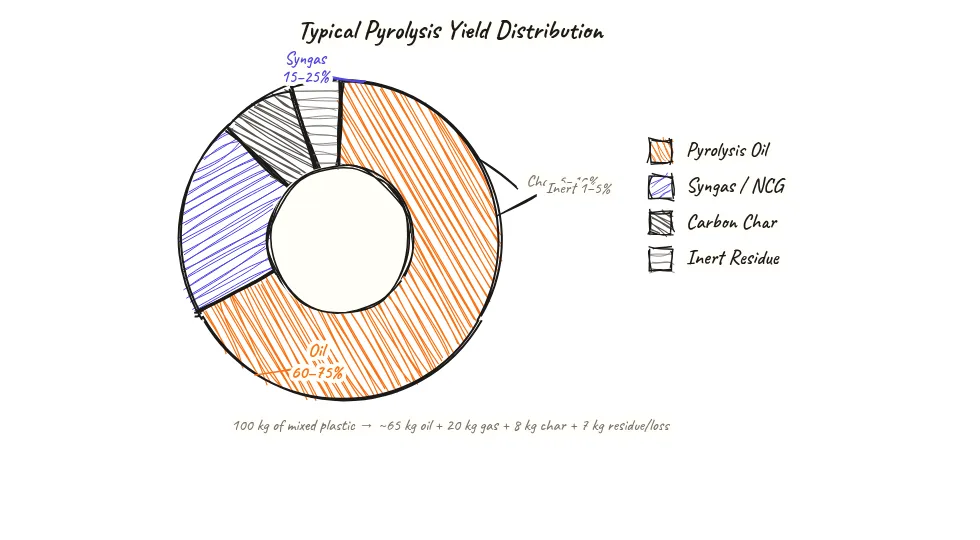
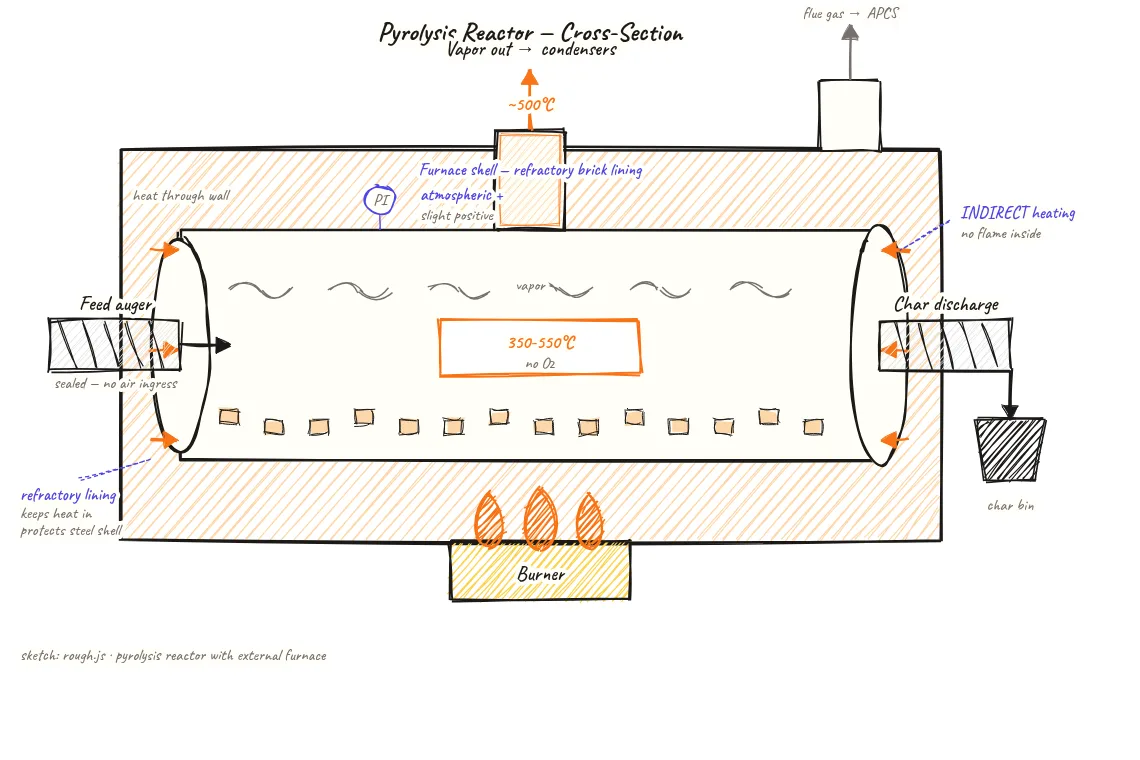
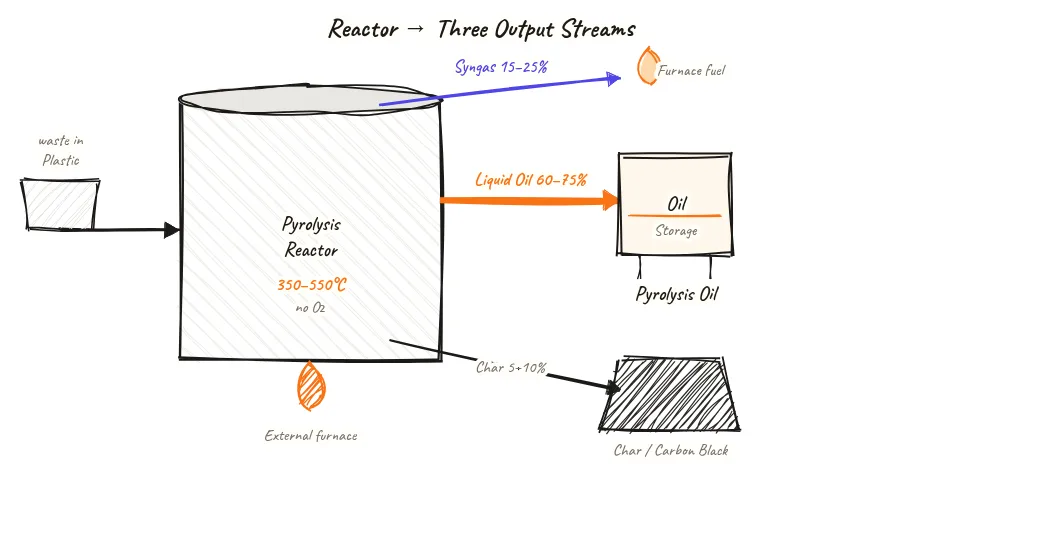
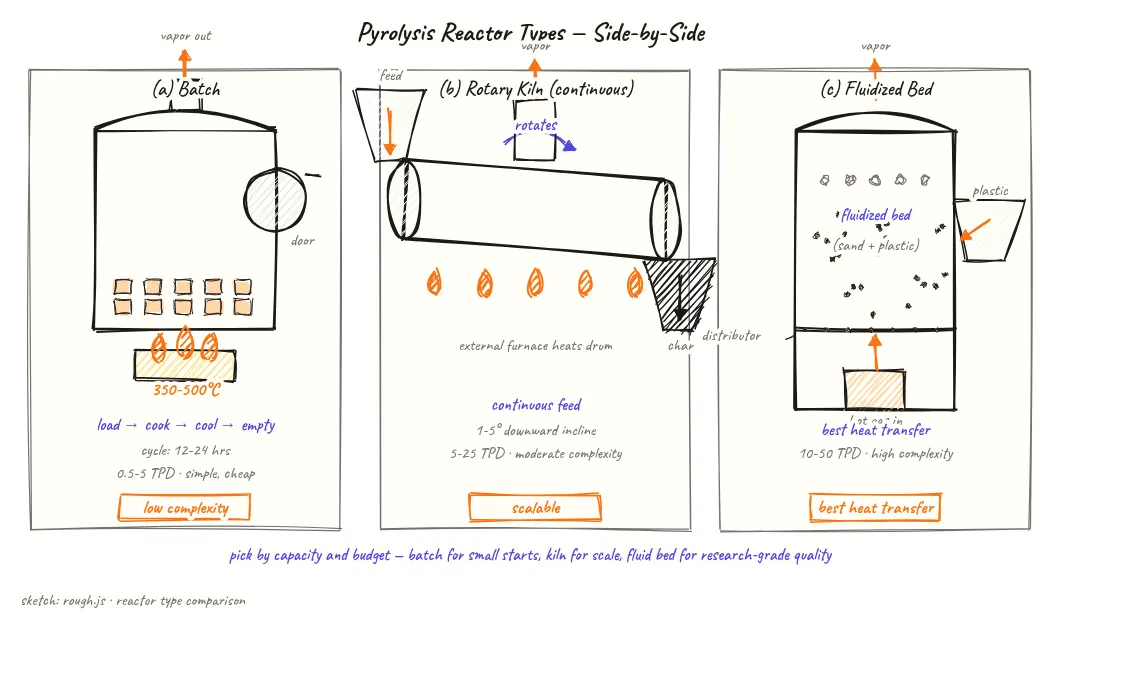
Slow pyrolysis (left panel) is the standard commercial approach used in most Indian plants. The reactor heats up at 10–20°C per minute, and plastic residence time at target temperature is 30–60 minutes per batch. This relatively gentle, sustained cracking produces the maximum oil yield (60–70% for clean PE/PP), because the slower heating gives intermediate hydrocarbon chains time to further crack into liquid-range molecules before exiting the reactor. Reactor design is simple — batch or continuous rotary kiln, no catalyst, no special atmosphere required.
Fast pyrolysis (centre panel) heats material to target temperature at 200–1,000°C per minute with a residence time of just 1–5 seconds. This extreme heating rate produces primarily light gases. Fast pyrolysis is primarily used in research and advanced biomass pyrolysis applications — for plastic waste, the high gas yield at the expense of liquid is not commercially preferred. Equipment complexity makes it uncommon in Indian commercial operations.
Catalytic pyrolysis (right panel) adds a catalyst bed inside or downstream of the reactor. The catalyst lowers the cracking temperature and improves product selectivity — producing oil with a higher proportion of shorter-chain, diesel-like hydrocarbons. Catalytic pyrolysis oil is closer to fuel specification without distillation. However, catalyst cost and fouling sensitivity with contaminated feedstock are barriers. Most Indian commercial plants use slow pyrolysis — the proven, oil-maximising approach.
Key insights
- Slow pyrolysis (10–20°C/min, 30–60 min residence) is the standard for Indian commercial plants because it maximises oil yield.
- Fast pyrolysis is impractical for mixed plastic waste — it requires clean, uniform feedstock and produces primarily gas rather than valuable oil.
- Catalytic pyrolysis produces cleaner, specification-compliant oil without distillation, but catalyst cost and fouling sensitivity are barriers for contaminated waste plastic.
- Residence time at temperature (not just peak temperature) determines product distribution — longer residence gives more oil, shorter residence gives more gas.
- For a first-time commercial pyrolysis operator in India, slow pyrolysis with a batch or rotary kiln reactor is the lowest-risk starting point.