Heating Mechanism — External vs Internal
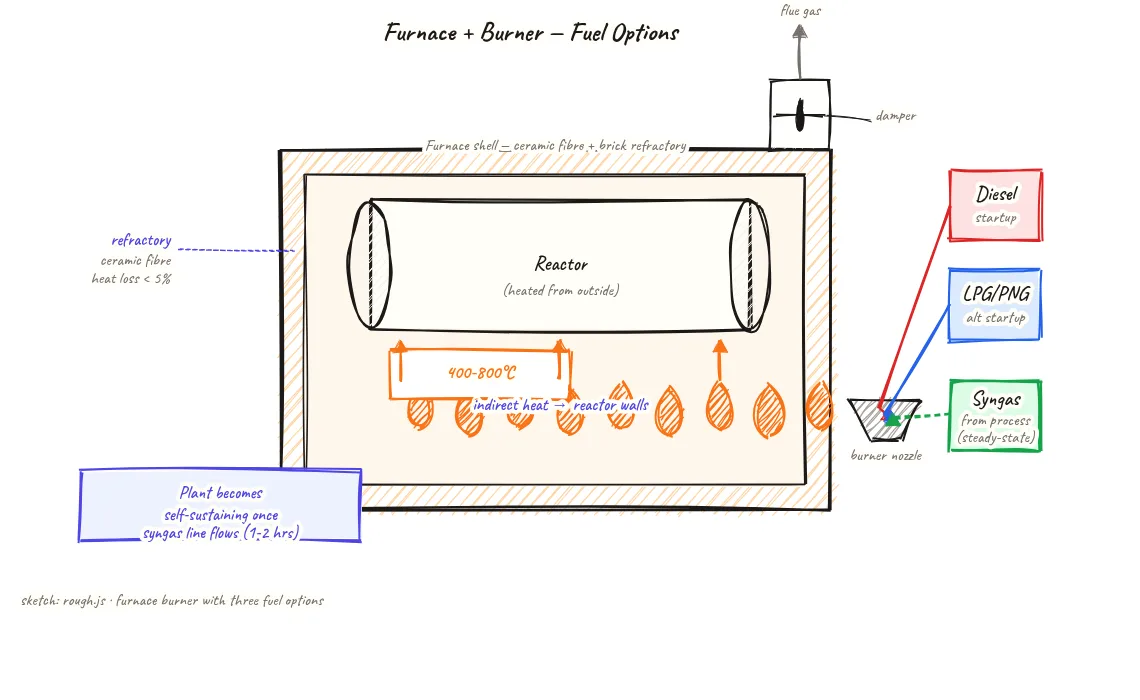
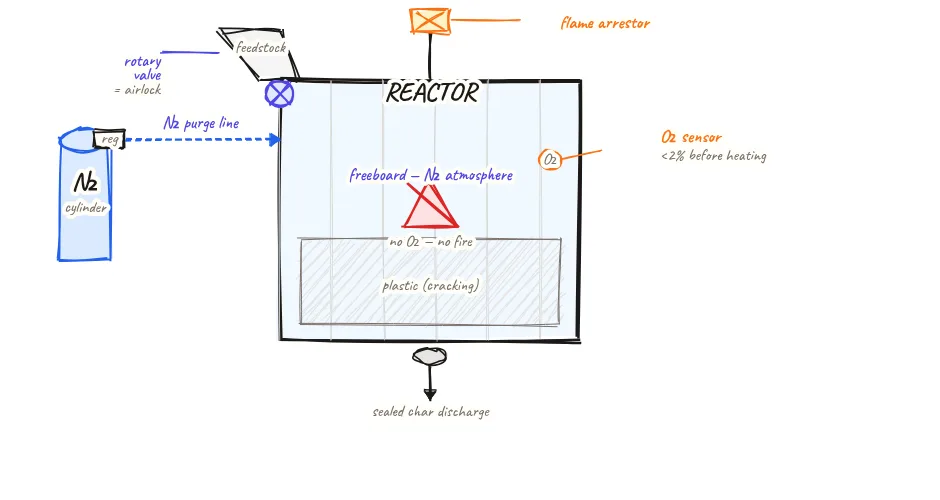
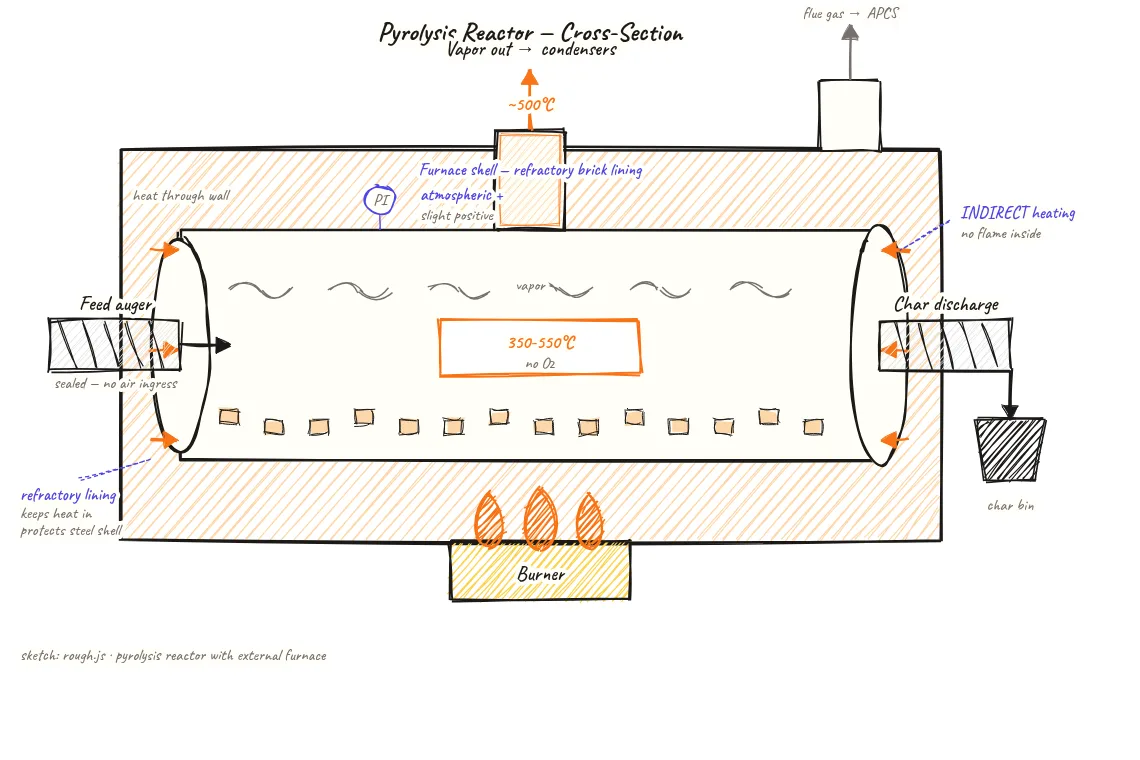
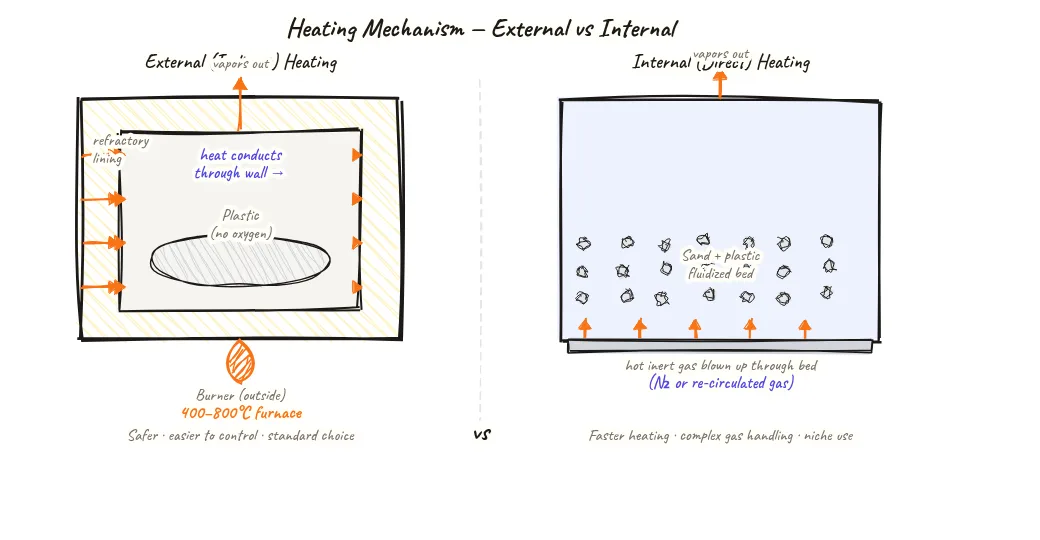
External heating wraps a furnace around the reactor (flame never contacts the plastic inside), while internal heating places the heat source inside the reactor — most commercial plastic pyrolysis plants use external heating because it eliminates the oxygen-in-reactor safety risk.
Beyond definitions
Planning to start a Plastic Pyrolysis business?
Get the full business understanding — capex, regulations, machinery, vendor questions, and risk checks before you commit capital.
How to read this sketch
Two panels arranged side by side, each showing a vertical cross-section of a reactor. Read as a comparison:
- Left panel (External heating): Two concentric rectangles — outer is the furnace shell, inner is the reactor. Burner on the outer shell fires into the gap between them. No heat source inside the inner reactor vessel.
- Right panel (Internal heating): Single outer rectangle (reactor vessel). An element or tube shown inside the reactor, in contact with the reactor contents. Warning symbol highlights the oxygen ingress risk at the heater-to-wall junction.
- Caption: 'Most commercial plants use external — safer, no oxygen risk inside the reactor.'
About this sketch
How you heat a pyrolysis reactor is a fundamental design choice with significant safety implications. This diagram compares the two approaches directly.
In external heating (left panel), the reactor vessel sits inside a larger refractory-lined furnace shell. The burner fires hot combustion gas into the annular space between the furnace and reactor walls. Heat transfers into the reactor by conduction through the reactor wall. The key safety advantage: the open flame is completely outside the sealed reactor. There is no possibility of combustion air entering the reactor even if a burner fault occurs. The only gas inside the reactor is plastic-derived — no oxygen, no combustion. This design also allows the furnace fuel to be changed (diesel → syngas → LPG) without any modification to the reactor itself.
In internal heating (right panel), the heat source — an electrical heating element, a combustion tube, or a hot-gas injection nozzle — is placed inside the reactor vessel itself. This allows faster heat-up and potentially more uniform temperature distribution inside the reactor. However, it introduces complexity at the reactor seal where the heater element or tube passes through the reactor wall, and any failure of the internal heating element can create unexpected temperature hotspots or, in combustion-tube designs, a risk of air ingress at the junction. This is why internal heating is uncommon in small and medium Indian commercial plants, though it is used in some laboratory-scale and research reactors.
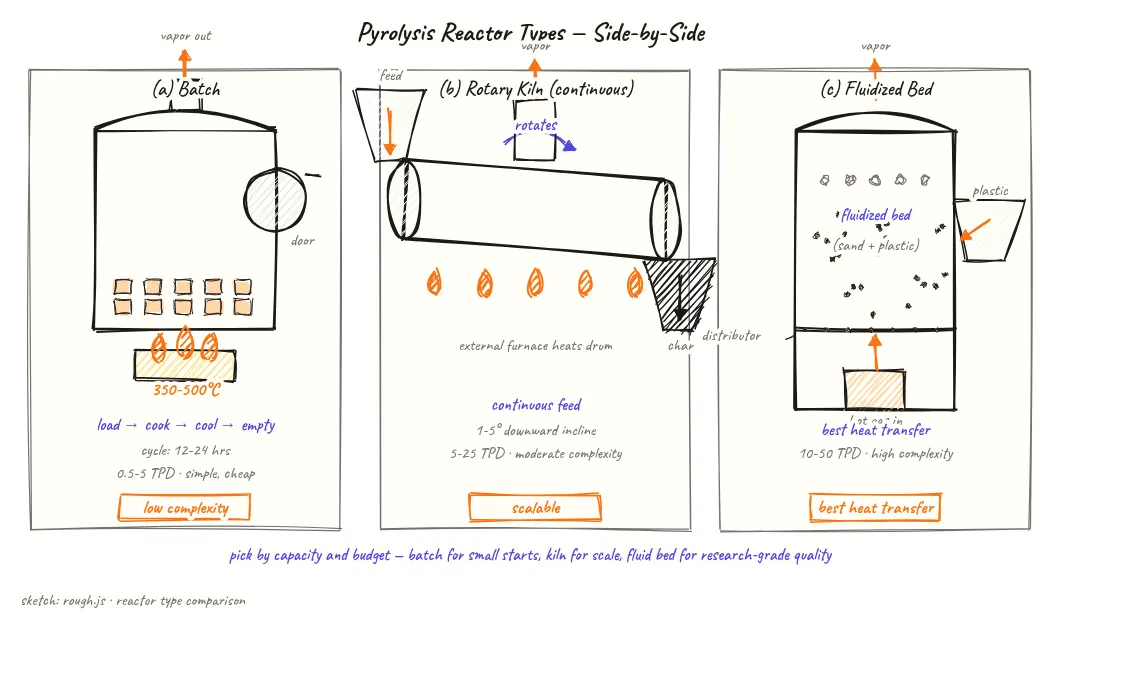
The verdict from Indian commercial experience: external heating is the proven, safer, and more maintainable choice for commercial plants. All CPCB-approved plant designs in India currently use external heating for plants in the 5–50 TPD range.
Key insights
- External heating keeps open flame completely outside the sealed reactor — eliminating the risk of combustion air contact with plastic vapors inside the vessel.
- Internal heating can provide faster and more uniform heating in theory, but introduces mechanical complexity at the heater-reactor wall junction — the primary safety weakness.
- All commercially approved plastic pyrolysis plants in India in the 5–50 TPD range use external heating — it is the verified safe design for commercial applications.
- External furnaces can run on multiple fuel types (diesel, syngas, LPG, PNG) without any change to the reactor — fuel flexibility is a secondary benefit of the external design.
- Refractory lining of the external furnace needs periodic inspection and relining (every 5–10 years) — a maintenance cost not present in internal heating designs.