Inerting the Reactor — N₂ Purge System
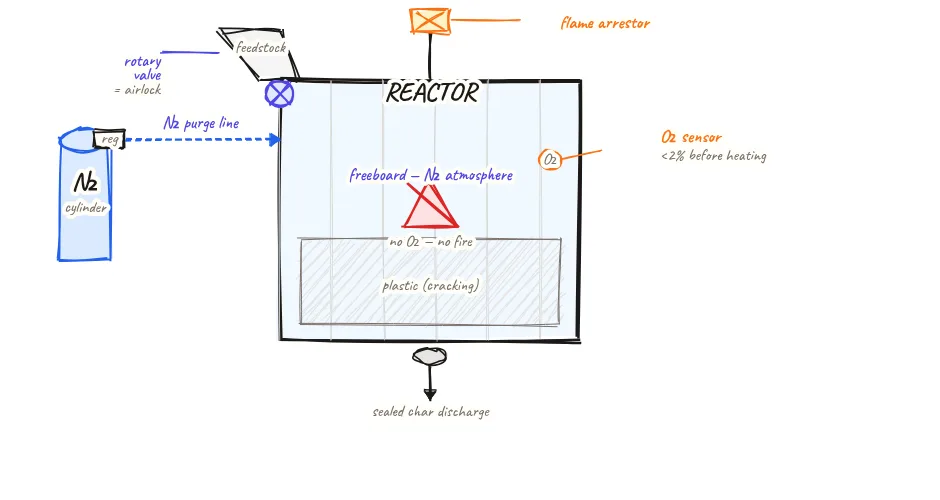
Before startup and whenever the reactor is opened, nitrogen gas is purged through the reactor to displace all oxygen — preventing the fire triangle from forming inside the vessel where hot plastic vapors and a potential ignition source could otherwise coexist.
Beyond definitions
Planning to start a Plastic Pyrolysis business?
Get the full business understanding — capex, regulations, machinery, vendor questions, and risk checks before you commit capital.
How to read this sketch
This is a cross-section of the reactor with safety systems annotated around it. Read as follows:
- N₂ cylinder + regulator (left): The nitrogen supply. Dashed blue line shows the purge flow path into the reactor freeboard.
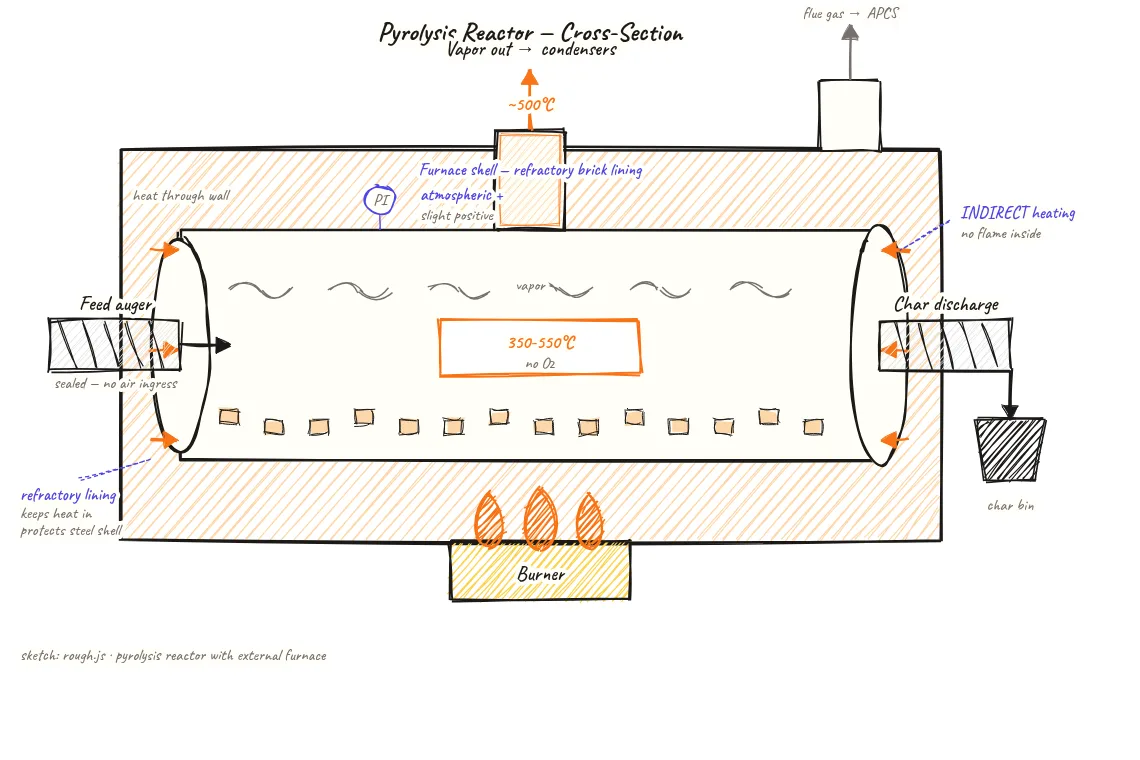
- Reactor interior: The 'no O₂ — no combustion' crossed-out fire triangle confirms the design intent.
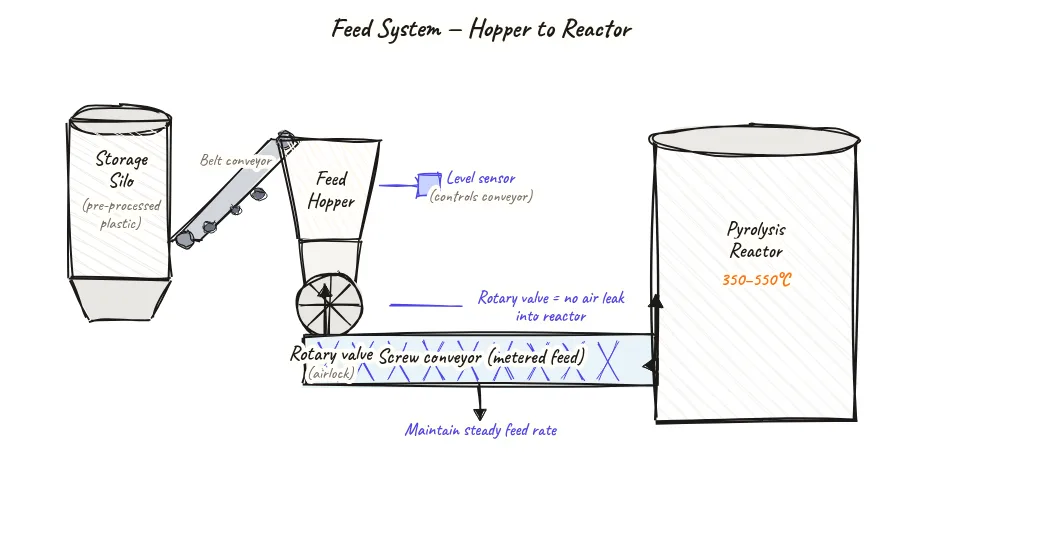
- Rotary valve (right, at feed inlet): Physical oxygen seal during feeding. Rotation direction shown.
- Flame arrestor (on vapor outlet line, top): Prevents flame back-propagation from the vapor handling side.
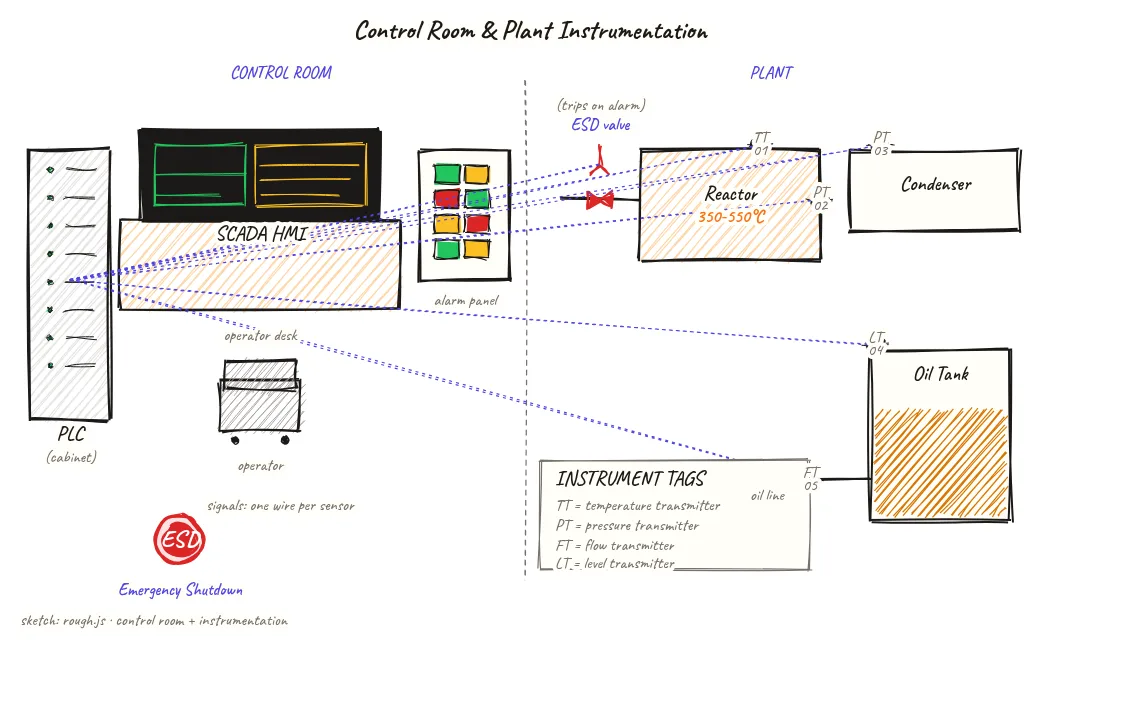
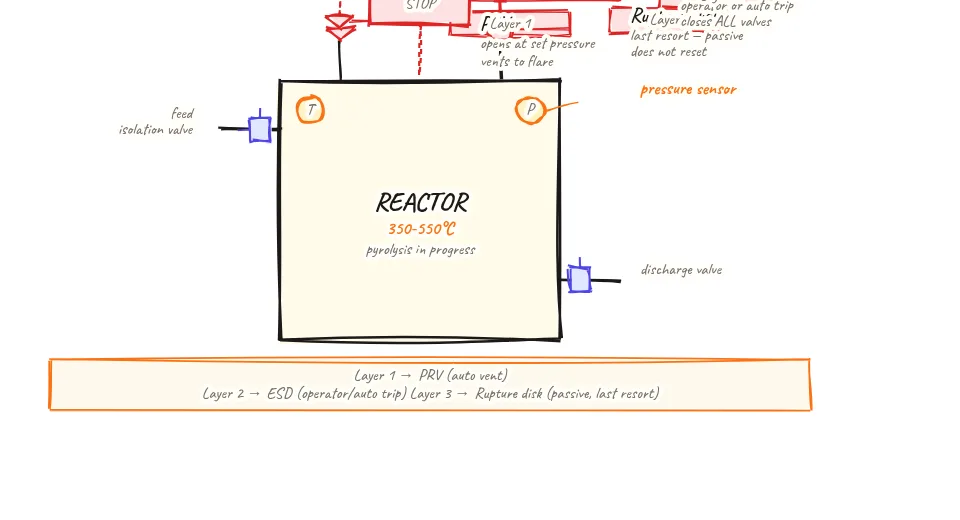
- O₂ sensor (at reactor outlet): Real-time oxygen monitor. Triggers alarm and ESD if O₂ exceeds 2%.
About this sketch
A pyrolysis reactor operates safely because oxygen is excluded from the hot, vapor-filled interior — breaking one side of the fire triangle (fuel + oxygen + heat). This diagram shows all the systems that maintain an oxygen-free environment inside the reactor, from startup through normal operation.
Before a batch starts, the reactor is cold and full of air from the previous unload. A nitrogen (N₂) purge displaces this air before the batch is sealed and heating begins. N₂ flows into the reactor freeboard at low pressure, pushing air out through the vapor outlet. Purging continues until an O₂ sensor at the reactor outlet reads below 1% oxygen concentration — at this point, combustion cannot occur even if an ignition source were present.
During normal operation, three systems maintain oxygen exclusion in parallel. The rotary valve airlock at the plastic feed inlet provides a physical barrier — each vane rotation moves plastic in while preventing air from entering. The slight positive pressure inside the reactor (maintained by accumulated plastic vapors and syngas) prevents external air from being drawn in through minor seal imperfections. The flame arrestor on the vapor outlet line prevents any flash-back from the condenser side from sending a flame front back into the reactor.
The O₂ sensor is the real-time safety monitor — it triggers the ESD sequence if oxygen concentration rises above 2%. Most Indian regulatory inspectors check for a functioning O₂ sensor as a mandatory item during CPCB/PESO inspections.
Key insights
- Nitrogen purge before every startup is essential — residual air from the previous discharge or inspection must be displaced before heating begins.
- Purging continues until the O₂ sensor at the reactor outlet reads below 1% — this is the confirmed safe condition before introducing heat.
- Three systems maintain oxygen exclusion during operation: positive reactor pressure, the rotary valve airlock at feed, and the flame arrestor on the vapor outlet.
- The O₂ sensor is a mandatory safety device for CPCB/PESO compliance — plants without a functioning O₂ monitor cannot demonstrate safe inert conditions.
- PLC integration of the O₂ sensor with the ESD system means the plant shuts down automatically if oxygen enters.