Reactor Safety Devices — Three Layers
Three independent layers protect the reactor against overpressure — a process alarm triggers first, the PRV relieves safely to the flare if pressure continues rising, and the rupture disk is the last physical barrier. Each layer acts independently of operator intervention.
Beyond definitions
Planning to start a Plastic Pyrolysis business?
Get the full business understanding — capex, regulations, machinery, vendor questions, and risk checks before you commit capital.
How to read this sketch
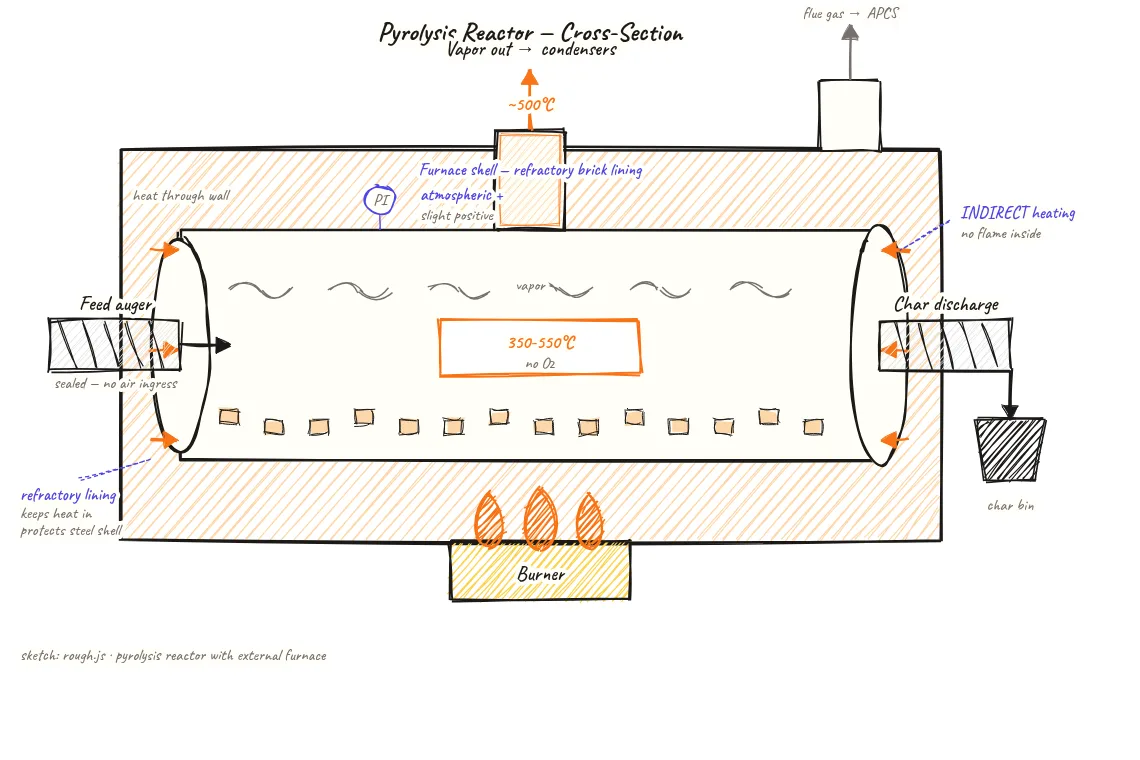
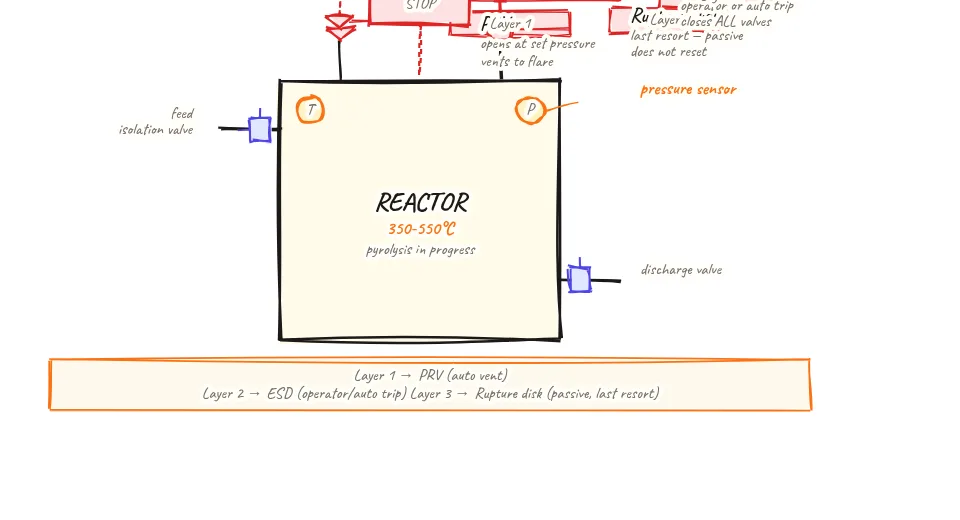
This is a cross-section of the reactor with safety devices annotated at specific positions. Read the safety devices in layered order:
- PRV (top-left, bow-tie symbol): Layer 2 pressure protection. Vents to flare. Reseats automatically.
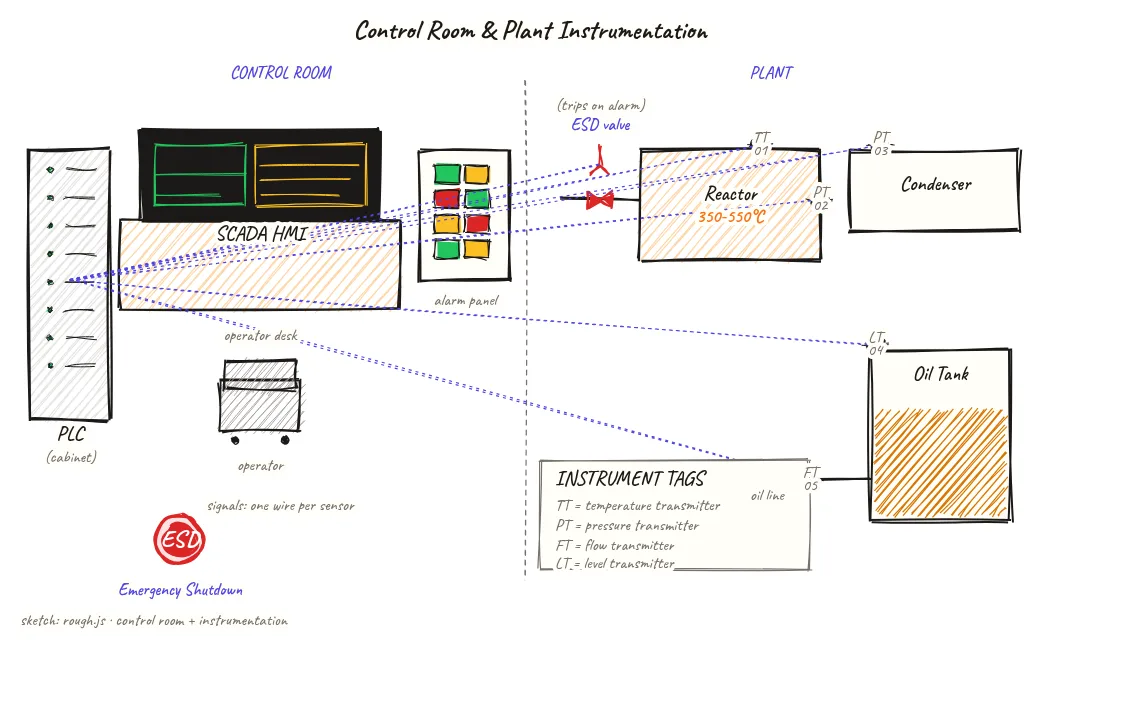
- ESD button (top-centre): Operator or PLC-triggered emergency shutdown. Closes feed and discharge valves and diverts NCG to flare.
- Rupture disk (top-right): Layer 3, final protection. Bursts at highest pressure setpoint. Does not reseat.
- Feed isolation valve (left): Closes on ESD. Stops plastic entering the reactor.
- Discharge isolation valve (right): Closes on ESD. Seals the char side.
- Three-layer summary bar (bottom): Shows Alarm → PRV → Rupture Disk in order of escalation.
About this sketch
Reactor overpressure is one of the most serious hazards in a pyrolysis plant. The three-layer safety system shown here ensures overpressure cannot happen without being arrested at one of three independent intervention points.
Layer 1 — Process Alarm: The PLC monitors reactor pressure via a pressure transmitter. When pressure exceeds the high-alarm setpoint (typically 10–15% above normal operating pressure), an audible and visual alarm triggers. The operator investigates and corrects the cause. Most pressure exceedances are caught and corrected at this layer.
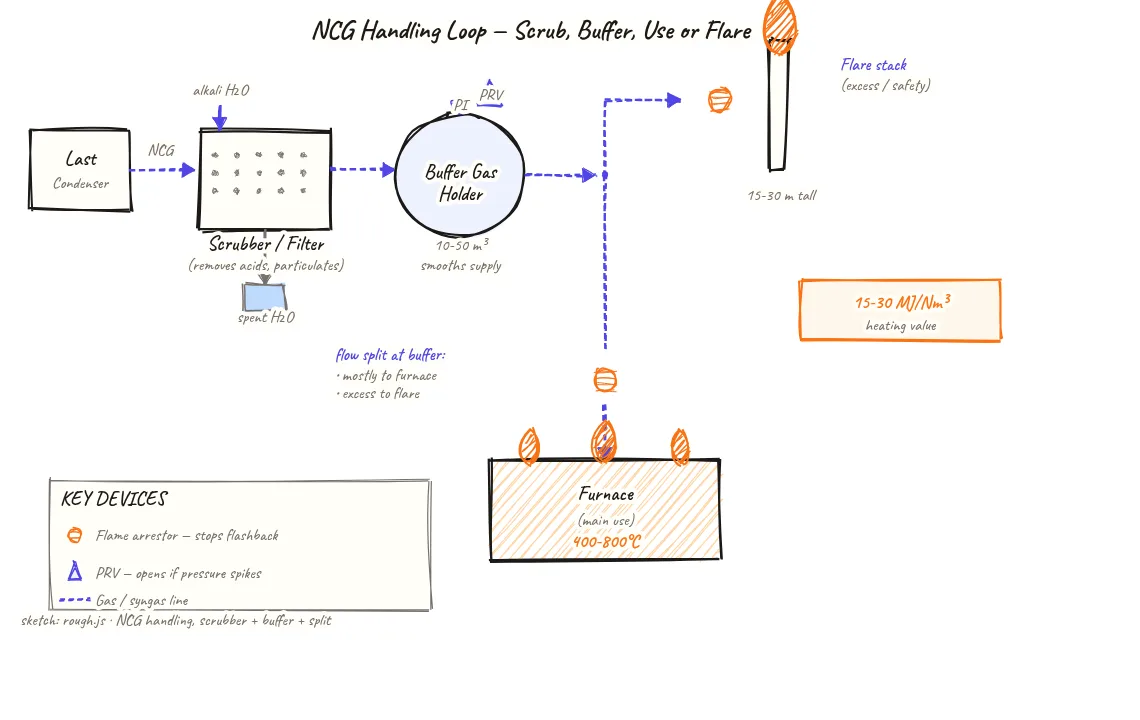
Layer 2 — Pressure Relief Valve (PRV): A spring-loaded PRV set above the alarm setpoint (typically 20–30% above normal operating pressure) opens automatically when its setpoint is reached. Gas vents through the PRV to the flare stack for safe combustion. The PRV reseats automatically when pressure drops. PRVs are mechanical and independent of electrical power — they work even during a power failure. They must be tested annually and their setpoint documented.
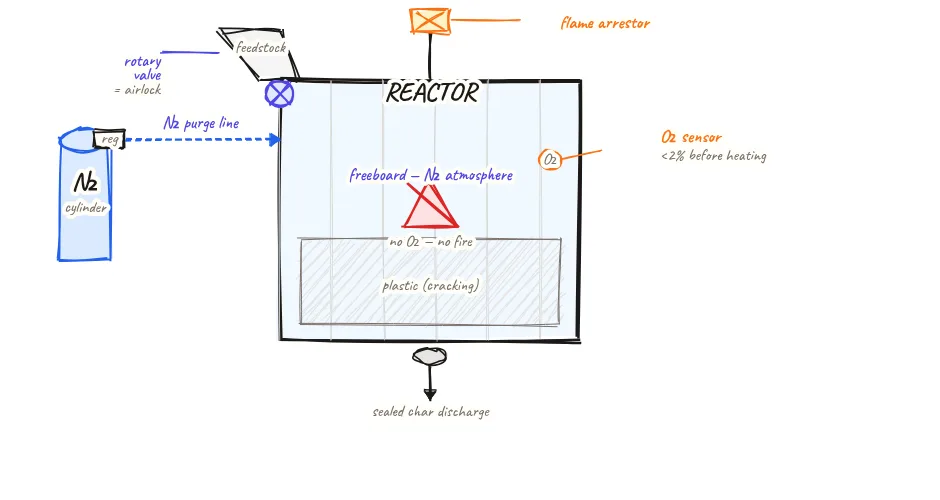
Layer 3 — Rupture Disk: Above the PRV setpoint, a rupture disk (bursting disk) provides final physical protection. This thin metal membrane in a holder bursts at a defined overpressure. Unlike the PRV, it does not reseat — once burst, the plant must stop for replacement and inspection before restarting. Feed and discharge isolation valves on both sides of the reactor close on the ESD signal, isolating the reactor during an emergency shutdown sequence.
Key insights
- Three independent layers of pressure protection ensure reactor overpressure is arrested at Layer 1 (alarm) before reaching Layer 2 (PRV) or Layer 3 (rupture disk).
- The PRV is a resettable mechanical device — it reopens after pressure normalises. The rupture disk is single-use — once burst, the plant stops for replacement.
- Both the PRV and rupture disk operate independently of electrical power — they provide protection even during a total power failure.
- PRV setpoint, test date, and last test result must be documented — PESO and CPCB inspectors check PRV test records during safety audits.
- ESD isolation valves on feed and discharge lines are as important as the PRV and rupture disk — they contain the emergency within the reactor.